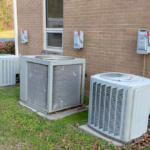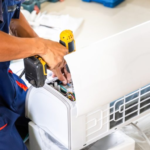
If you’re standing in your living room wondering “why is my AC so loud all of a sudden?” you’re not alone. It’s one of the most common questions HVAC technicians hear, and the honest answer is that a noisy air conditioner is almost always trying to tell you something. The trick is knowing what.
One Call Does It All – Schedule Your Home Service Today!
Expert HVAC services for homes across South Louisiana.
Below are the nine most common reasons your AC is loud, what each sound usually means, and how serious the problem is. If you’re not sure what you’re hearing, the safest move is to call a technician before the noise turns into a bigger repair.
1. Loose or damaged blower wheel
If your AC sounds loud inside your house and the noise is coming from the indoor unit, the blower wheel is the most common culprit. The blower wheel is a finned drum that spins to push air through your ducts. When it loosens on the motor shaft or one of the fins cracks, you get a rhythmic thumping, scraping, or rattling sound that gets faster as the fan speeds up.
This is usually a fixable repair, not a replacement. But a wobbling blower wheel that’s left alone will eventually take out the motor it’s attached to, which turns a small repair into an expensive one.
2. Failing compressor
A loud, deep growling or grinding sound from your outdoor unit — especially when the system first turns on — often points to a compressor that’s starting to fail. The compressor is the heart of the AC system, and replacing one isn’t cheap. If you suspect compressor trouble, shut the system off and call for service. Running a failing compressor for too long can destroy other components.
3. Bent or unbalanced fan blade
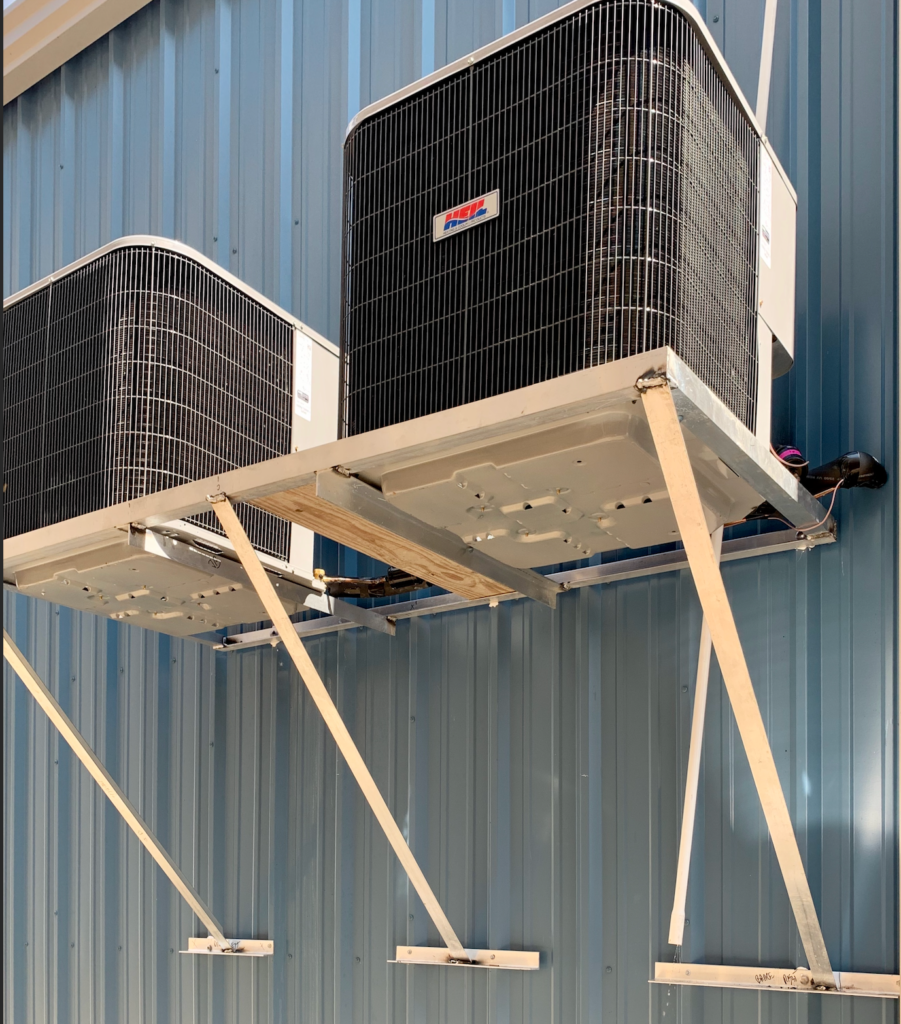
If you hear a regular slapping or clicking sound from outside, look at the fan blade on top of your condenser. A bent blade — sometimes from a stick, a piece of debris, or even a hail strike — will slap against the housing or strike the wires inside. A loud AC outside with this sound needs attention soon, because an unbalanced fan stresses the motor bearings.
4. Loose hardware and panels
Every air conditioner is held together with screws, bolts, and panels, and over years of vibration some of them work loose. A rattling or buzzing sound that comes and goes with the system cycling on and off is often nothing more than a loose access panel or a screw that’s backed out. This is the easiest thing on the list to fix — sometimes literally a thirty-second job — but it’s worth checking before assuming the worst.
5. Failing fan motor bearings
If you’re asking yourself “why is my AC so loud” and that sound is a high-pitched squeal, a metallic shriek, or a low grinding hum that’s constant whenever the fan runs, the bearings in the fan motor are likely going. Motors with sealed bearings can’t be re-lubricated, so the only real fix is motor replacement. Catching this early matters — running a motor with bad bearings until it seizes can damage other parts and sometimes the fan blade itself.
6. Refrigerant problems and hissing
A hissing or whistling sound near the outdoor unit or the indoor coil usually means a refrigerant leak. The sound is the gas escaping under pressure. This is one of the few AC noises that’s also a health and environmental concern — refrigerant is regulated, and a leak should be located and sealed by a licensed technician rather than just topped off.
A loud bubbling or gurgling sound, on the other hand, often points to low refrigerant or air trapped in the lines, and also needs professional attention.
7. Loose ductwork
Sometimes the AC itself isn’t loud — the ducts are. Booming, popping, or pinging sounds that happen as the system kicks on are usually ducts expanding from the temperature change, especially when sections of ductwork are loosely supported or sagging. A duct repair specialist (like our team at JMB A/C) can re-secure the runs and add expansion-tolerant connectors that absorb the movement quietly.
8. Dirty or clogged condenser coil
A condenser that’s caked with cottonwood, leaves, lawn debris, or salt deposits has to work harder to push air through, and the strain shows up as a loud, laboring sound from the outdoor unit. The fix is a coil cleaning, ideally as part of a seasonal maintenance visit. In Louisiana, where pollen and storm debris pile up fast, this should be on every homeowner’s spring checklist.
9. Aging system at the end of its life
Sometimes “why is my AC so loud” doesn’t have a single mechanical answer — the system is just old. After fifteen or twenty years, AC components don’t fail one at a time; they all start wearing out together, and the cumulative noise of an aging compressor, tired fan motors, and loose hardware becomes constant. If your unit is well past a decade old and getting louder year over year, it’s worth at least getting a replacement quote alongside any repair estimate.
When a loud AC needs immediate attention
Call a technician right away if you hear:
- Sudden grinding, banging, or metal-on-metal contact
- A loud electrical buzzing or crackling (this can indicate failing electrical components, which is a fire risk)
- Hissing combined with weak cooling (refrigerant leak)
- A loud thump followed by the system shutting itself off
These aren’t sounds to live with for a week to “see if they go away.”
What you can check yourself (safely)
Before calling, with the system off at the breaker:
- Look around the outdoor unit for debris — sticks, leaves, anything caught in the fan
- Check that the access panels on the condenser are tight
- Replace your indoor air filter if it’s been more than a month or two
- Listen to determine whether the loud noise is from indoors, outdoors, or in the ducts between
That information will save your technician time and save you money on the diagnostic visit.
Get a quiet AC back
If you’re still asking yourself, “why is my AC so loud?” and you’re tired of guessing why, JMB A/C diagnoses noisy systems across the New Orleans area and the surrounding parishes. We’ll figure out what’s causing the racket, tell you exactly what it’ll cost to fix, and get your home quiet and comfortable again. Call (985) 290-4395 or schedule online at https://jmbac.com/contact-us/.