An AC unit making loud noise isn’t just annoying. It’s diagnostic information. Each type of sound — banging, buzzing, squealing, hissing, clicking, grinding — points to a different component and a different urgency level. The faster you identify what you’re hearing, the better the odds you catch a $200 repair before it becomes a $2,000 one.
One Call Does It All – Schedule Your Home Service Today!
Expert HVAC services for homes across South Louisiana.
Here’s a sound-by-sound breakdown of why your AC unit is making loud noise and what to do about it.
Banging or clanking
If your AC sounds like something is loose and bouncing around inside, it usually is. Common causes:
- A loose compressor inside the outdoor unit (this is serious — the compressor isolation mounts have failed)
- A broken piston or connecting rod inside the compressor (very serious; usually means compressor replacement)
- A loose blower wheel hitting its housing inside the indoor unit
- A piece of debris that’s worked its way into the fan area
What to do: Shut the system off at the thermostat and breaker. Banging from the compressor specifically can cause catastrophic damage if you keep running the unit. Call a technician the same day.
Buzzing or humming
Buzzing usually points to electrical issues, and the location of the buzz matters:
- At the outdoor unit, with no fan running: likely a failed capacitor or stuck contactor. The compressor is trying to start but can’t get the kick of voltage it needs.
- At the outdoor unit, loud and constant during operation: a failing compressor under high load, or loose mounting hardware vibrating against the housing.
- At the indoor air handler: a failing blower motor or a relay/transformer issue.
Electrical buzzing isn’t something to ignore. Failing electrical components can overheat and pose a fire risk, particularly in older systems.
Squealing or shrieking
A high-pitched squeal usually means bearings. The fan motors in both the indoor blower and the outdoor condenser have bearings that wear out, and when they start to fail, you hear it as a metallic shriek that’s loudest when the fan first kicks on, sometimes fading as the motor warms up.
This is a real “fix it before it fails” situation. A motor running on worn bearings will eventually seize. When it does, the fan blade can be damaged, the motor windings burn out, and what was a $300 motor replacement becomes a $1,200 job involving multiple parts.
Some older belt-driven systems will also squeal when the belt is slipping or worn. That’s a much cheaper fix — belt replacement is straightforward — but still worth addressing quickly.
Hissing or whistling
A hissing AC unit usually means escaping refrigerant. Hissing near the indoor coil, the outdoor unit, or anywhere along the refrigerant lines is almost always a leak.
Why this matters beyond the noise:
- Your system loses cooling capacity as refrigerant escapes
- Running low on refrigerant damages the compressor
- Refrigerant is regulated and can’t legally just be topped off without leak detection in many cases
- Modern refrigerants are also greenhouse gases, so leaks have environmental impact
If you hear a hiss, schedule service. Don’t just keep topping it off.
A whistling sound that’s more like air moving through a too-small gap can also be a duct issue — air escaping through a leak in your ductwork or being forced through a restricted return.
Clicking
A single click when the system turns on or off is normal — that’s the relay engaging. What’s not normal:
- Repeated clicking when the system tries to start: a failing capacitor or control board
- Clicking from the outdoor unit fan area during operation: a bent fan blade striking debris or wiring
- Clicking inside the air handler: something loose in the blower housing
Repeated clicking that doesn’t result in the system actually starting needs prompt attention — the system is trying to start and failing, and each attempt stresses the components.
Grinding
A grinding sound is one of the most serious AC noises. It almost always points to:
- Failed motor bearings that are now metal-on-metal
- A compressor that’s failing internally
- Something hard caught in the fan blade
Shut the system off and call for service the same day. Continuing to run a grinding AC unit is how repairable problems turn into replacement decisions.
Why is my AC unit making loud noise when the heat is on?
If you have a heat pump system, you may notice it’s louder during heating than cooling. Some of this is normal — heat pumps run a defrost cycle in cold weather that includes a “whoosh” sound and reversing valve activation that some people describe as a loud thump or hiss. But if the noise is unfamiliar, getting worse, or paired with weak heat, it’s worth a service call to rule out a stuck reversing valve or failing defrost board.
If you have a gas furnace and an AC, a loud noise when only the heat is on points to the furnace, not the AC. Common furnace noises include:
- Rumbling burners (often dirty)
- Loud whooshing on startup (delayed ignition — needs attention; can indicate a gas safety issue)
- Booming or banging at startup (also delayed ignition or expanding ductwork)
- Squealing inducer motor
How long can you wait?
Here’s a rough urgency guide for an AC unit making loud noise:
- Today/tonight: banging, grinding, electrical buzzing, hissing with weak cooling, any noise that wasn’t there yesterday and is paired with the system not cooling properly
- This week: squealing, repeated clicking, rattling that’s getting worse
- At your next scheduled maintenance: light rattles that have been there a while and aren’t changing, expansion popping in ducts, a faint buzz that’s always been there
When in doubt, err toward sooner. Most AC repairs are far cheaper when the failing part is replaced before it takes out other components.
Get the noise diagnosed
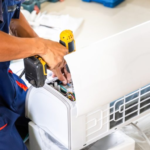
Trying to diagnose a loud AC from a video or a description is hard even for an experienced technician. The fastest path to a quiet, working system is a service visit with someone who can listen at the unit, check the electrical readings, and pinpoint the issue.
JMB A/C handles noisy AC diagnosis and repair across New Orleans, St. Bernard Parish, and the surrounding areas. Call (985) 290-4395 or schedule online at https://jmbac.com/contact-us/ and we’ll get to the bottom of it.